

Saturation divers are among the most skilled and elite professional divers in the world. They often spend days or weeks under pressure, completing complex tasks that only human hands can achieve at extreme depth.
To understand what sat diving is, we need to understand the breathing gases divers use. For standard dives, the breathing gas used is standard compressed air, containing 78% nitrogen and 21% oxygen. Breathing air at extreme pressure and depth causes nitrogen narcosis, a bit like being drunk. Not really something you want to be while working underwater.
To solve this, nitrogen is replaced by the inert gas helium. By spending long periods at pressure, the helium in the breathing gas reaches equilibrium within all tissues of the divers body, thus the tissues become fully saturated. As with all forms of diving with breathing apparatus, when divers return to the surface, they must take time to decompress, allowing the gasses (nitrogen or helium) to slowly be released via the lungs. Returning to normal pressure too quickly causes inert gases to be released in the body causing potentially fatal decompression sickness, or ‘the bends’.
A bit of history
In 1957, George F. Bond discovered that the decompression time does not increase after tissues become fully saturated. The amount of time needed to decompress is determined by the depth and type of breathing gases used. The discovery of saturation diving was ideal for commercial operations, as divers could spend much longer underwater, reaching greater depths.
The first commercial sat diving operation was in 1965 by Westinghouse to replace faulty trash racks at a depth of 61m. Jacques Cousteau and his team also recorded the first sat diving operation as part of the Conshelf III exercise that same year. After the discovery of helium as a nitrogen replacement in breathing gas mixtures, diving beyond 150m was safer, and in 1981 an early record was set for equivalent depth pressure of 686m. It took +31 days to decompress from this pressure.
Offshore gas and oil exploration played an important part in the development of commercial sat diving. Oil discoveries in the North Sea during the 60’s led to new procedures and equipment development for saturation diving. Health and safety during this time were not great but got better in the 1990’s when the industry started to mature.
Sat dive process
During typical saturation diving operations, divers will compress in a chamber aboard the boat. A diving bell locks onto the system whereby they will transfer to to take them down to the working depth. The bell drops down to a depth just below the dive site. The divers exit the bell, supplied with heliox via what’s called the ‘umbilical’.
When the day is done, the divers return via the diving bell and it latches back on to the decompression chamber. The divers live in the chamber for weeks at the same pressure as the work site. After 28 days, divers decompress in the chamber at the surface according to the depth they were diving. It’s almost like they are living in space, in another atmosphere, which they kind of are. Here’s a great video explaining the process.
Watches at depth
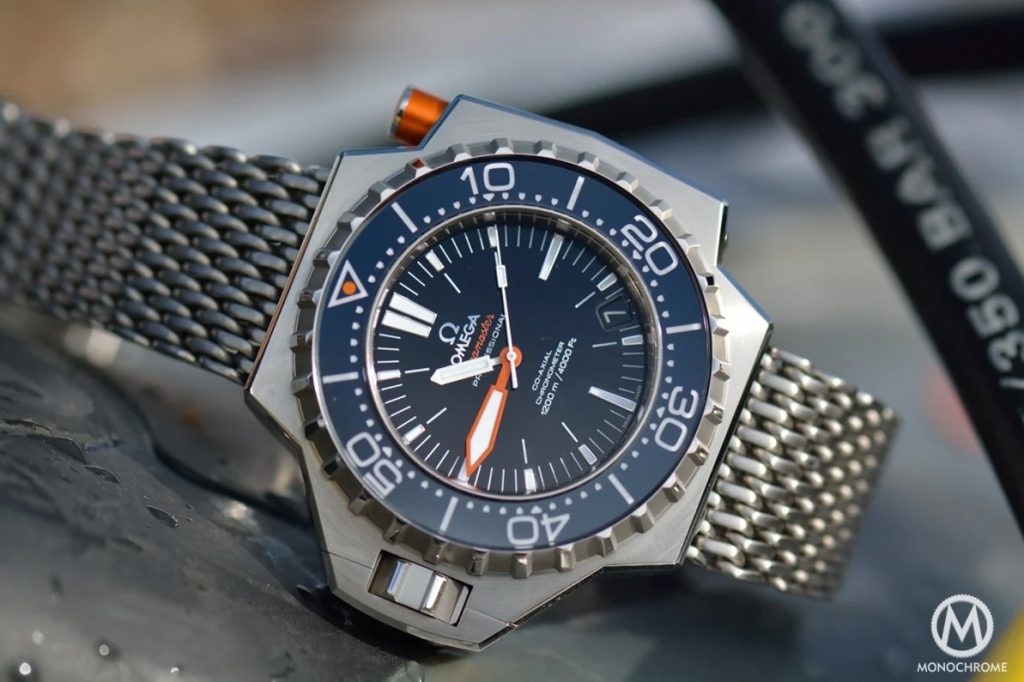
Just like the human body on a sat dive, watches also accumulate helium during saturation dives. If this helium is not released during decompression, it can cause the crystal of the watch to pop off, exposing the dial and hands and damaging the watch. To solve this, watchmakers came up with the helium escape valve (HEV) or helium release valve. The concept is simple – release internal gas without letting water in when submerged. There have been many types of HEVs over the years. some require manual operation, others work automatically. Omega developed the Seamaster ‘Ploprof’ which released the gases by pressing the red button at the top right. Rolex developed an automatic HEV built flush in the side of their Sea-Dweller. Other brands designed a extra crown that was unscrewed to release internal gases.
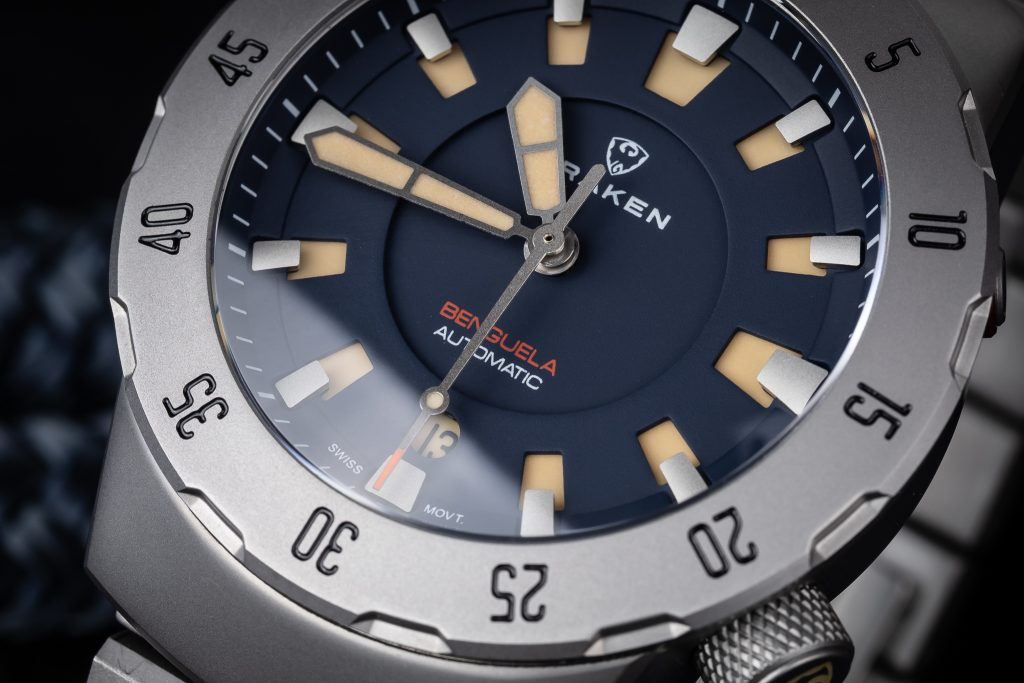
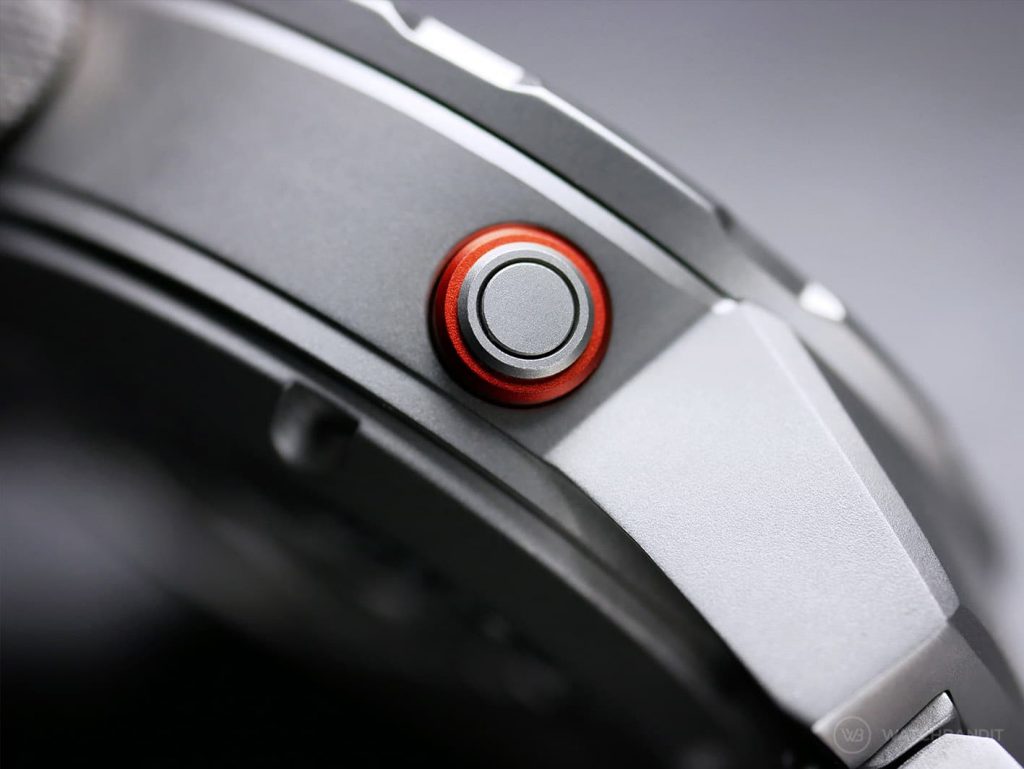
The HEV on our Benguela model has an automatic release valve, similar to the one on the Rolex. Rated to 500m water resistance, it can easily cope with the pressures during saturation dive operations.
Some important notes
Often divers will open the main crown of their watch on the way down (blowdown/compression) so that the internal pressure of the watch matches the external pressure. If this is not done and the crown is opened while at pressure, it can cause a sudden influx of gas which could dislodge a seal or suck in dirt or lint. This process also makes it possible to adjust the time and date while under pressure if necessary.
We recommend following this process to ensure the HEV works properly, just don’t forget to screw the crown back down after the blowdown.