In the world of Swiss watchmaking, certain names echo through history for their artistry or innovation. Among them, Edmond Capt stands out not for flamboyance, but for engineering pragmatism. As the creator of the Valjoux 7750, Capt helped shape the modern mechanical chronograph—and, in many ways, ensured its survival.
Early Career and Mindset
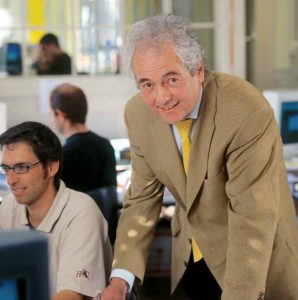
Edmond Capt was trained as a watchmaker during a time when Swiss horology still relied heavily on traditional craftsmanship. But unlike many of his contemporaries, Capt leaned toward industrial efficiency and problem-solving. His work would come to reflect a philosophy that valued reliability, ease of production, and long-term serviceability over decorative complexity.
This mindset would prove crucial in the late 20th century, when the Swiss watch industry faced one of its greatest existential threats.
Designing the 7750 in a Time of Crisis
In the early 1970s, Capt was working at Valjoux, a company known for producing chronograph movements. At the time, traditional chronographs often relied on column wheel mechanisms—elegant, but expensive and labor-intensive to produce.
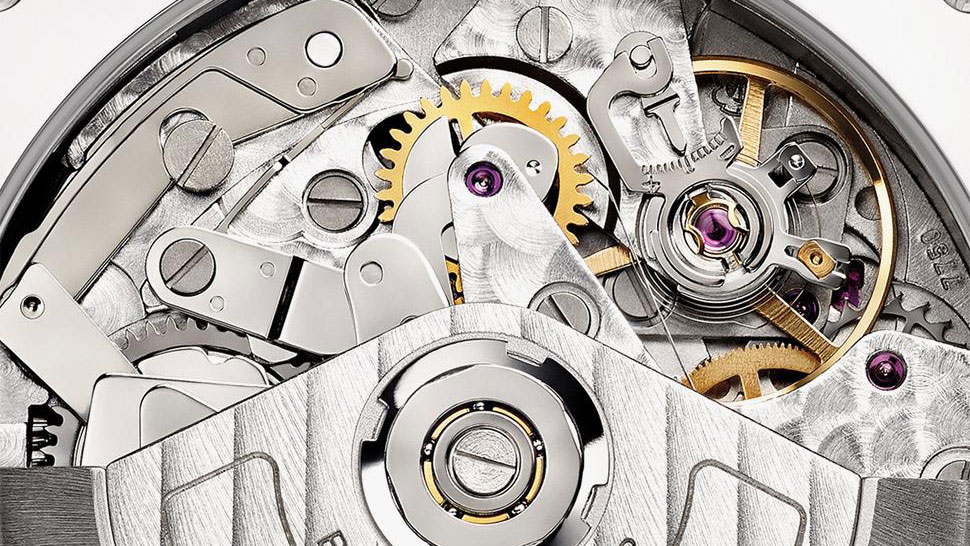
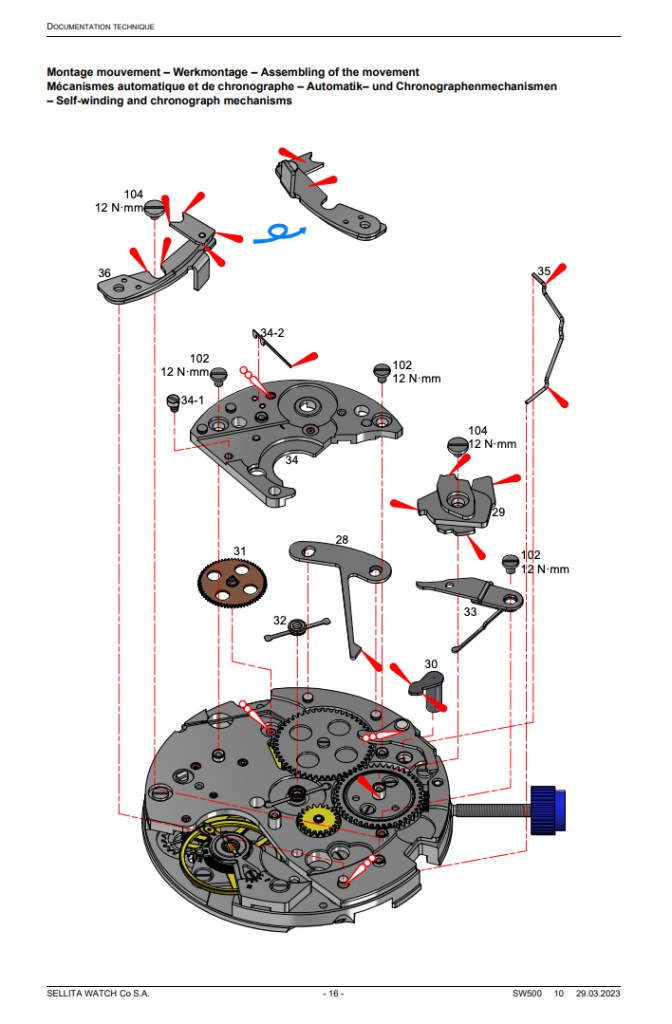
Capt took a radically different approach when developing what would become the 7750. Instead of the traditional column wheel, he used a cam-and-lever switching system. This decision was not about cutting corners—it was about making a chronograph that could be manufactured efficiently, assembled with consistency, and maintained with relative ease.
The result was the Valjoux 7750: a rugged, integrated automatic chronograph movement designed for industrial scalability without sacrificing performance.
The Quartz Crisis and a Near Miss
Shortly after the 7750 was introduced, the Swiss watch industry was hit by the Quartz Crisis. Demand for mechanical movements collapsed as quartz watches flooded the market.
Production of the 7750 was halted, and like many mechanical calibres of the era, it seemed destined for obscurity. But here, Capt’s foresight played a quiet yet critical role.
According to industry lore, when automated production lines were being dismantled, Capt preserved the technical plans and tooling specifications for the 7750. This decision would prove pivotal when mechanical watches began their resurgence in the 1980s.
Revival and Industry Impact
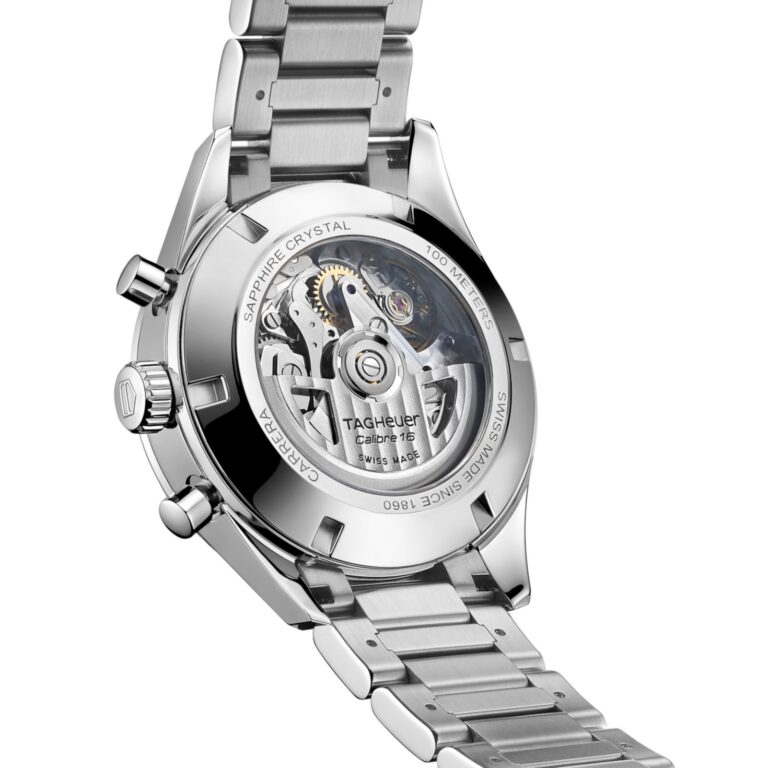
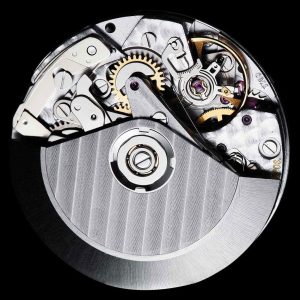 As interest in mechanical watches returned, ETA SA—which had absorbed Valjoux—revived the 7750. Its design made it uniquely suited to the new era:
- It could be produced at scale
- It was robust enough for everyday wear
- It was adaptable for various complications
Soon, the 7750 became the backbone of the Swiss automatic chronograph industry. Brands across the spectrum—from tool-watch makers to luxury houses—adopted it as a reliable foundation.
Capt’s engineering philosophy had, almost inadvertently, future-proofed the mechanical chronograph.
Leadership at ETA
Edmond Capt’s influence extended far beyond the 7750 itself. He later became Technical Director and eventually Managing Director of ETA, where he oversaw the development and production of numerous movements that would define modern Swiss watchmaking.
Under his leadership, ETA became the dominant supplier of mechanical movements, standardizing quality and ensuring the accessibility of Swiss watches worldwide.
Engineering Philosophy and Legacy
What sets Edmond Capt apart is not just what he built, but how he thought. His work reflects a few key principles:
- Function over ornament: Prioritizing performance and reliability
- Industrial thinking: Designing for repeatability and scale
- Longevity: Creating movements that can be serviced for decades
The Valjoux 7750 embodies all of these traits. It is not the most intricate chronograph ever made, nor the most beautiful—but it is arguably one of the most important.
A Quiet Giant of Watchmaking
Unlike many celebrated figures in horology, Edmond Capt remains relatively unknown outside enthusiast circles. Yet his contribution is immense. Every time a mechanical chronograph ticks reliably on a wrist—whether in a pilot’s cockpit or on a daily commuter—it often owes something to his work.
In an industry that sometimes leans heavily on heritage and romance, Capt’s legacy is refreshingly grounded: a testament to smart engineering, practical design, and the enduring value of getting the fundamentals right. His story is a reminder that true innovation isn’t always about reinvention. Sometimes, it’s about building something so solid that it lasts when everything else falls away.
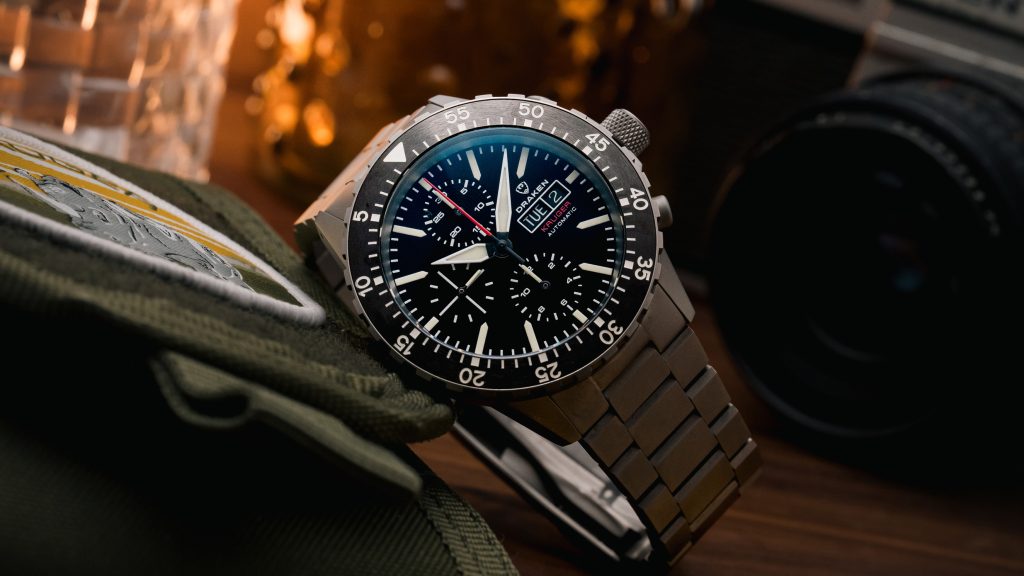
Kruger Auto
For the 2025 release of the Kruger, we managed to source a small batch of Valjoux/ETA 7750 for our first automatic chronograph, the Kruger Auto. Much like the philosophy of Edmund Capt, the Kruger design follows a utilitarian and function-first approach. This is why we specifically picked the 7750 – for its unrivalled reliability and robustness.
We’ll be bringing back the Kruger Auto in mid-May. Stock will be limited to 50pcs.